Polhemslunden: Property Management Operations Platform
Tenant services and fault reporting connected to property-management workflows.
Visit the live project →Polhemslunden is a property-management platform built to support more than public presentation. My role focused on implementing the site, content management, tenant-service flows, and operational handling that carries incoming requests into a manageable follow-up process.
A property site that supports operations
The public experience brings together properties, housing, premises, storage and parking, tenant information, contact paths, and fault reporting. The goal was not simply to market a portfolio, but to make the site useful for prospective and current tenants as well as the team managing the properties.
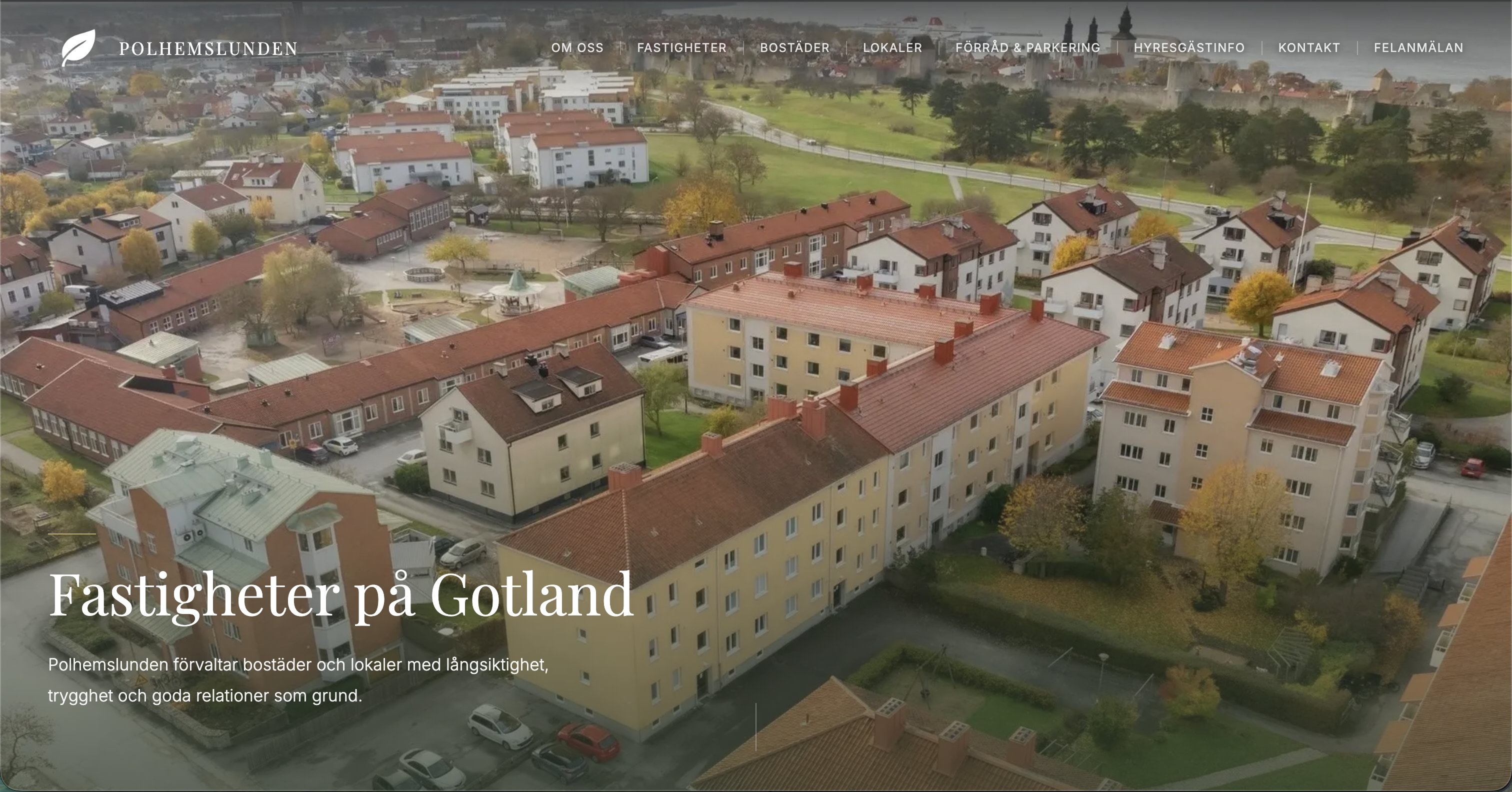
The public site establishes the property portfolio while giving visitors direct paths to housing, premises, tenant information, and service requests.
Information that reduces avoidable contact
A structured tenant-information area gives residents a clear place to find guidance for recurring questions. Content and property information are managed through a tailored Sanity Studio, so the client can maintain the site without treating every update as a development task.
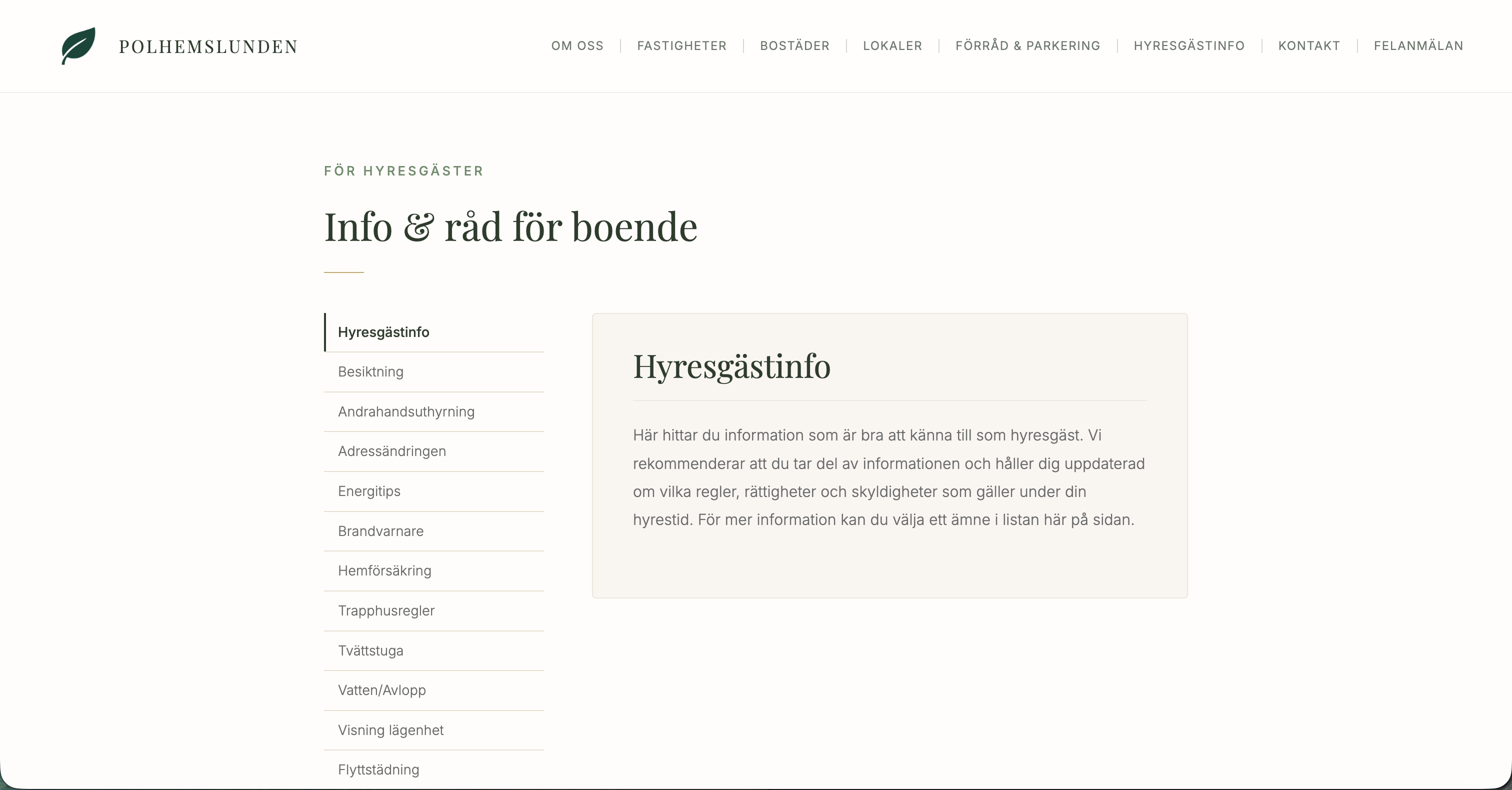
The tenant-information area organizes practical guidance into clear, maintainable topics.
Fault reporting as a real workflow
The digital fault-report flow supports both housing and commercial-premises cases, validates required information, records consent, and can accept an image. The report is captured first in the operational data store before dependent actions are attempted, reducing the risk that an incoming issue disappears when another service fails.
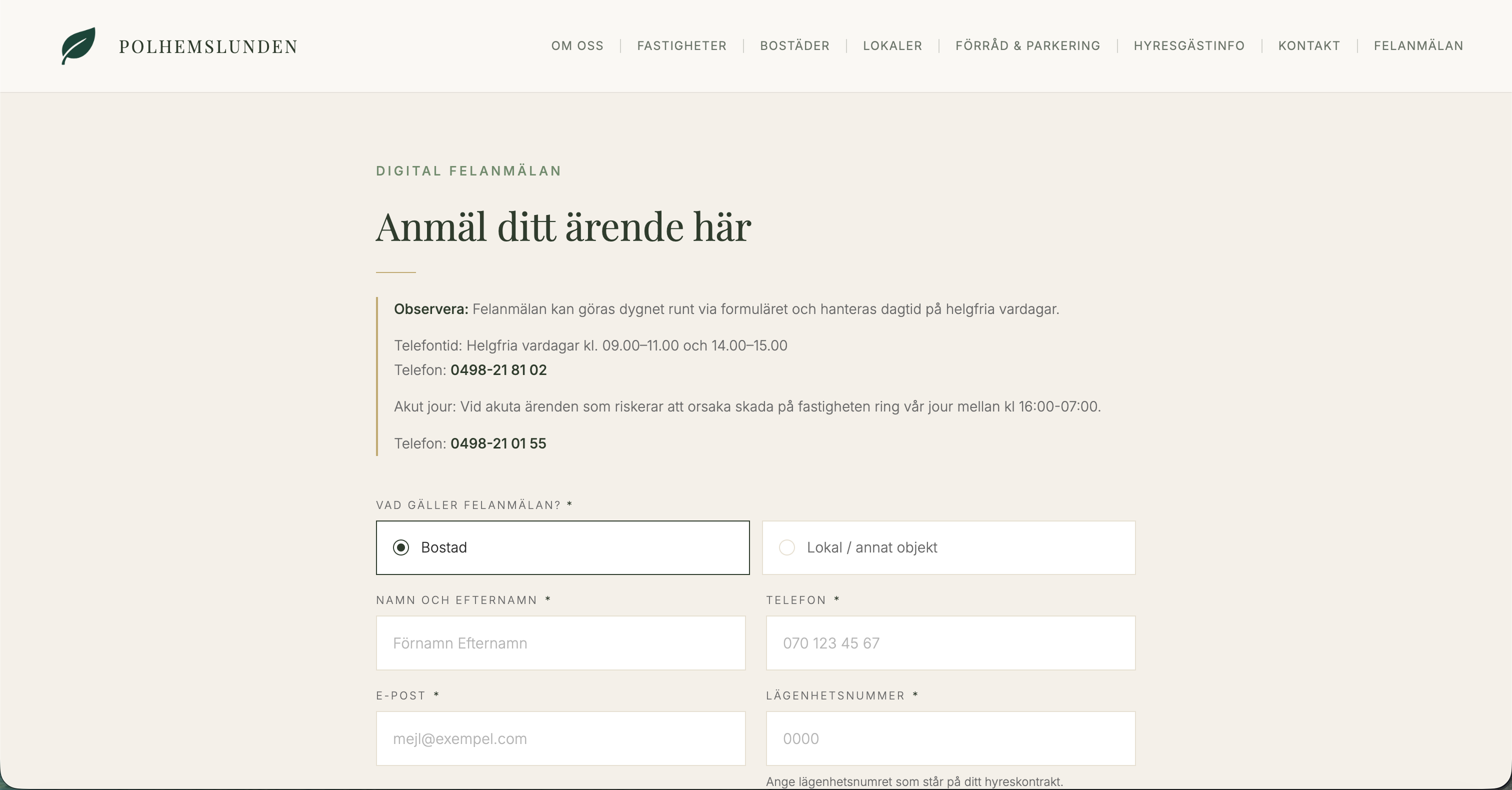
The form distinguishes between residential and commercial-premises reports so the follow-up flow can use the right context.
Route safely, fall back deliberately
A fault report can be matched against tenant and lease information before an external property-management workflow is attempted. The matching logic uses identity, address, apartment information, lease category, confidence, and ambiguity safeguards. When no safe match exists, the system records the outcome and keeps a human fallback path rather than guessing.
Operational handling after submission
Interest submissions and fault reports are available to staff through an internal admin workflow with status, assignee, notes, soft deletion, a trash view, and restoration. This makes the public form the start of an operational process rather than the end of a message inbox.
Content and operational data, separated
Sanity manages public content and property material, while Supabase stores private operational submissions. The implementation also includes email notifications, validation, consent handling, rate limiting, and explicit integration-failure paths.
Technical overview:
- Next.js and React
- Sanity CMS and a tailored Studio structure
- Supabase for private submissions and operational records
- Property-management integration-aware routing
- Resend for notifications and confirmations
- Custom admin sessions, validation, rate limiting, and focused workflow tests